




The Dirt on Dirt – Raised Gardens
Soil is the basic foundation for any garden, especially raised garden soil, which is why we have multiple articles in our ‘Dirt on Dirt’ series. After several questions from gardeners asking us what is the best soil to use in raised beds, we’ve decided to add an article that covers the ins and outs of creating soil for raised bed gardens. Taking the time to get the right soil for raised beds will make the rest of your gardening season much easier…after all, happy roots are the path to happy plants when using quality raised bed soil.


It is tempting to think of raised beds as really large containers, but that isn’t quite the right mindset when working with raised garden bed soil. Raised beds are a hybrid between a landscape bed and a large container and thus the soil used in raised beds is a hybrid as well. You can’t just use the soil in your garden which will compact too much for plant roots to be happy. However, potting soil is too light and fluffy for this purpose, making a proper raised bed soil recipe essential. So what exactly should you be using?
Low Hanging Fruit
If you don’t have the time or the inclination to create your own raised bed garden soil, you can buy bagged soil formulated for raised beds. It’s a legitimate option, especially if you are creating fairly limited raised beds. However, if you are installing multiple beds or a large raised bed bagged soil will get expensive. Look for soil mixes that are specifically mixed for raised beds. For many of us, mixing our own soil will be a better option when learning how to make raised bed soil.

Mixing your Own Soil - The Components
While it would be comforting to have a specific all-purpose recipe that is the only one to use, real life rarely gives us such cut and dry instructions – at least when it comes to plants, especially when creating a raised bed soil recipe. I am going to give you two different recipes to consider. They have similarities – the ingredients in the soil mixture are quite similar. However, the proportions and some of the details differ a bit. The recipes are similar enough that comparing the two recipes to each other and to the components you can find locally will hopefully reassure you that despite some variation, you are in the ballpark. Mixing soil has a lot more in common with making soup, which is a very forgiving form of cooking, versus baking angel food cake where ingredient proportions must be exactly right, similar to learning how to make raised bed soil. So don’t worry about being exact.
Garden Soil, Mineral Soil, Topsoil – They’re all the Same Thing
Garden soil is simply the native soil in your garden. Native soil comes in an extremely wide range and includes everything from very sandy soil, to dense clay, to the lovely loam soils that some are fortunate to have – and every kind of soil in between. Even if your soil is less than ideal, it can be a good idea to incorporate native soil in your raised garden bed soil. Native soil will include minerals and nutrients, as well as earthworms, insects, microfungi, and bacteria that occur naturally in your soil. While we might tend to think of fungi, bacteria, and insects as problems to solve, they are usually a great addition to your soil. All of these “critters” are the main reason to include your own garden soil into raised beds when possible. If your soil is terrible, you may want to buy premium garden soil rather than incorporating your native soil.
Well-Aged Compost
Compost is organic matter that has decomposed and transformed into a soil-like substance that is great for growing plants and a core component of compost for raised beds. You can buy bagged compost or create your own, both are great choices. However, creating enough compost to establish raised garden soil may be tough for the average gardener. Fortunately, many communities have municipal compost operations that use yard waste, old Christmas trees, leaves, etc… to create compost for raised beds. These locations can be great options to find inexpensive, bulk compost to use in your raised beds. It isn’t unusual for the compost to be free or low cost. The very nature of compost is that it will continue to decompose over time, so you will need to add additional compost regularly to your raised beds. The good news is that adding compost for raised beds also adds nutrients that your plants will use to power growth and flowering.
High-Quality Peat Moss
Peat moss is used to add structure and water holding capacity to your raised beds and soil for raised beds. Oddly it both promotes great drainage and holds water that plant roots can access as needed, which is important when building soil for raised beds. Peat moss has a rather wide quality range and using the best quality peat moss you can afford is recommended..
There are lots of different types of peat moss sold in garden centers and box stores. You can tell the quality of the peat moss by two different parameters: fiber length and dust content. Look for a high fiber content with long strands of peat fiber when mixing raised garden bed soil. The color should be tan to light brown. You do NOT want very fine peat that has a dust-like texture. The color of this type of peat moss is dark brown to black. This type of peat moss is inexpensive but breaks down in the soil within a year and doesn’t add any structure to the soil mix used for raised garden soil.
The higher quality peat mosses are compressed in bales and usually expand 2-3 times their volume once they are unpackaged and have absorbed moisture.
Some alternatives to peat moss are composted bark (preferably made from hardwoods), Coir which is coconut fiber and rice hulls. While rice hulls are pretty much on size, it is best if you choose coarser versions of composted bark and coir. Like peat moss, larger fibers will take longer to break down and will give more porosity to your soil in raised garden soil mixes.
Additional Amendments
Mix in a slow or controlled release plant food that is appropriate for the plants you are growing in your boxes, a common step in any raised bed soil recipe. This type of fertilizer will provide nutrition for a set number of weeks or months. There are many options including organic versions (those formulated for veggies) or other formulations developed for flowering plants.
If you are mixing soil for crops that develop edible roots (such as onions, potatoes, carrots, and chives) adding perlite to the mix will allow for better aeration and root penetration. We have found that many root crops like carrots grow straighter and fill out more evenly along the root if they are grown in a porous soil.
The John Gaydos Raised Bed Soil Mix
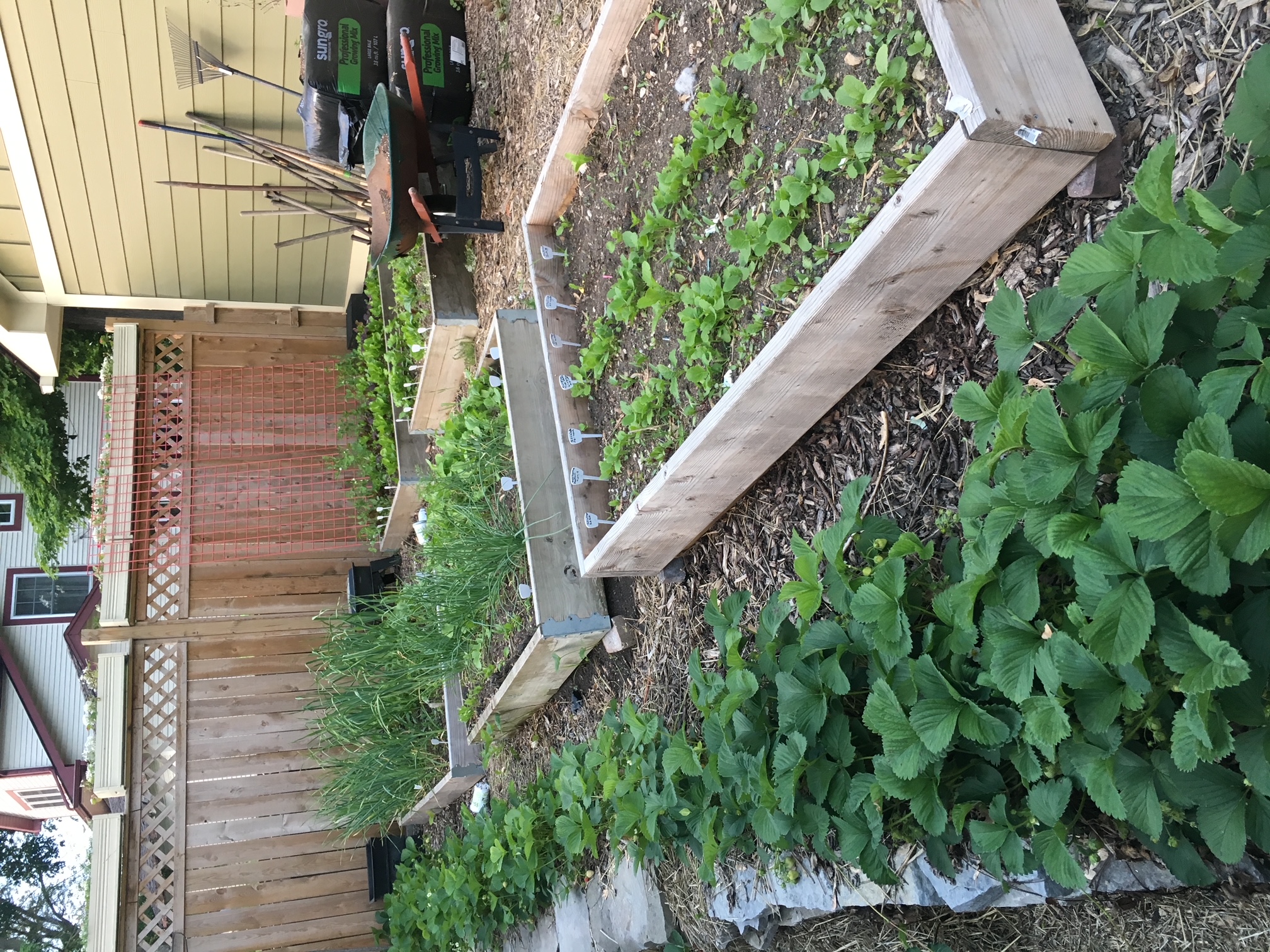
John has nice loam soil in his garden. Yes, I know the rest of us are jealous. John’s raised garden bed mix is about 1/3 native soil, 1/3 well-aged compost, and 1/3 peat moss measured by volume. Plus plant food, and for the root veggies perlite is added, a common practice when refining raised garden bed soil.
John has nice loam soil in his garden. Yes, I know the rest of us are jealous. John’s raised garden bed mix is about 1/3 native soil, 1/3 well-aged compost, and 1/3 peat moss measured by volume. Plus plant food, and for the root veggies perlite is added.

Laura LeBoutillier’s Raised Bed Soil Mix
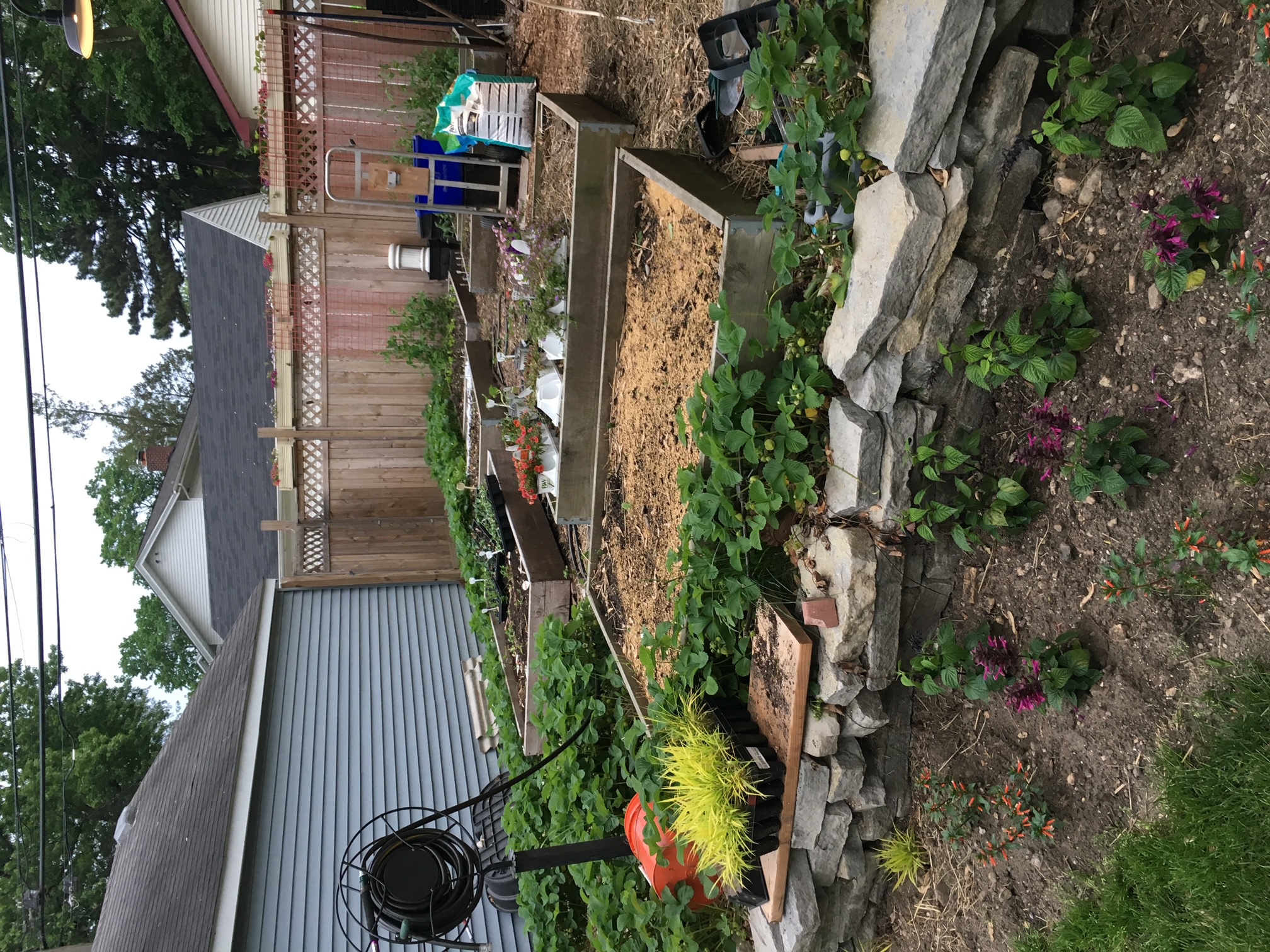
Laura at Garden Answer uses a different mix than John. She has, as she has called it, “crappy soil.” Rather than using her native soil, she buys premium topsoil in bulk when she creates raised beds, another approach to how to make raised bed soil. She mixes that with high-quality compost as well as composted manure. Her ratios are about 60% topsoil, 30% well-aged compost, and 10% composted manure.
There are many ways to create soil for your raised beds, but the main components included in the mix are reasonably similar. You may need to tinker with your mix for several years to get the best performance from your plants. As the compost continues to decompose, you will need to regularly incorporate additional compost. If you have several raised beds it might make sense to use a three-year rotation where each year you add compost to 1/3 of your beds. That way you don’t have to tackle that large project all at once.
Mixing the Components
If you are creating a brand new raised bed and are using your native soil as a component, once the walls of the bed are in place begin by using a shovel or spade to loosen the soil in the box. This will help encourage good drainage in the raised bed and improve raised bed soil performance..
From there simply add layers of your ingredients in the box, incorporating slow or controlled release plant food with each layer. Once the box is full, turn the soil over with a shovel until the ingredients are well blended. You may want to have the soil mounded a bit higher than the sides of your bed since the soil will settle. Finish up by gently and slowly watering in the soil until it is moist and leave the bed to sit overnight, or longer. You can begin planting as early as the next morning in properly prepared soil for raised beds.
Learn More:
Watch this Video by Laura for more Info on Raised Bed Gardening.
Explore this Pinterest Board Featuring Plants for Landscape Color.
Learn How to Plant a Shrub.